
Employee Early Intervention
Workplace injury prevention starts before an ache becomes an injury. We come to your worksite to spot risk factors early, support employees before discomfort escalates, and help keep them moving safely on the job. The program is built around prevention, education, and ergonomic support, not treatment for a diagnosed work-related injury.
Workplace Early Intervention Programs
How Our Workplace Injury Prevention Program Works
Wrist, arm, shoulder, and back pain complaints rarely show up out of nowhere. More often, they point to a workplace habit, movement pattern, or physical demand that has been building over time. Because repetitive stress injuries are so common and so preventable, workplace injury prevention starts with catching those signals early.
We come to your worksite for a one-on-one consultation that looks at the job itself, from daily tasks to movement demands to potential risk factors. From there, employees receive early intervention support that fits the work they do, along with ergonomic recommendations and movement education tailored to their roles.
The goal is to provide prevention-focused support at the worksite before minor discomfort becomes a bigger problem. If an employee needs more advanced medical treatment for a work-related injury, care should transition into the appropriate occupational health or workers’ compensation process.
Early Symptom Screenings
We help identify minor musculoskeletal discomfort through screenings that catch issues before they become bigger problems.
Ergonomic and Job Task Analysis
Our team observes job tasks, identifies ergonomic risks, and recommends practical changes that reduce physical strain and support safer, more efficient movement.
Education and Movement Support
Employees receive coaching on body mechanics, safe lifting, stretching, mobility, and self-management strategies that support safer movement on the job.
Worksite Analysis
A Closer Look at the Job Itself
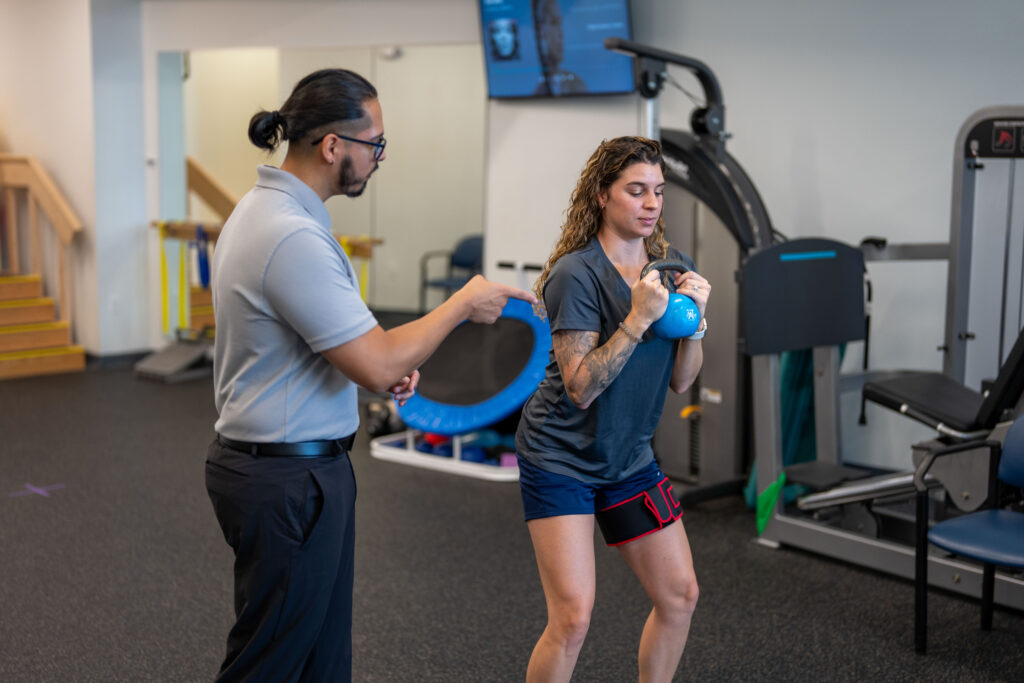
We take a closer look at the job itself, on-site and in real working conditions. This helps us understand the physical demands, movement patterns, and environmental factors a role actually involves. From there, we document clear next steps that help reduce risk and support safer performance on the job.
Here’s what that analysis can include:
- A detailed job description and summary of work risks.
- Ergonomic analysis and recommendations for job or workplace modifications.
- A blueprint for injury prevention goals and ongoing workplace risk reduction.
Together, these insights help create a safer, smarter approach to the work your team does every day.
What to Expect From the Program

Onsite Consultations
We come to you for worksite screenings, with no clinic visit required. Our team can spot discomfort, see movement demands in real time, and identify risks early.

Ergonomic Evaluations
Our team observes job tasks, identifies ergonomic risks, and recommends practical changes that reduce physical strain.

Custom Exercise Programs
Each employee gets exercises and movement strategies built around their role, along with printed materials that reinforce stretching, mobility, and self-management.

Fewer Recordable Injuries
Catching complaints early helps reduce claims, limit lost time, and keep your workforce healthier, stronger, and more resilient.
Why Workplace Injury Prevention Matters
Strong workplace injury prevention helps reduce costs, improve productivity, and build a safer workplace culture. Every evaluation is led by a licensed physical or occupational therapist and designed for your work environment.
Each participant also leaves with printed materials that reinforce the exercises and body mechanics they have learned, helping keep your employees safe, healthy, and at work.
Common Questions
Employee Early Intervention FAQs
A workplace injury prevention program brings a licensed physical therapist or occupational therapist directly to your worksite to help employees address early discomfort, reduce physical strain, improve movement, and perform job duties more safely. The focus is on prevention, education, ergonomic support, and safe work practices, not treatment for a diagnosed workers’ compensation injury.
Depending on your workplace, services may include:
- Ergonomic assessments and job task analysis.
- Safe lifting, body mechanics, stretching, and warm-up support.
- Early symptom screening, injury-prevention education, and self-management instruction.
- Exercise, conditioning, and practical recommendations that help reduce physical demands and improve employee comfort.
These services are designed to keep employees healthy, productive, and working safely.
The program can help reduce the risk of musculoskeletal injuries, support employee health, safety, productivity, retention, and address discomfort before it leads to lost work time. It can also identify practical ergonomic improvements, make the workplace safer, and connect employees with the appropriate level of care when additional medical evaluation is needed.
Reach out to Ivy Health’s Employer Services team to schedule a consultation. We’ll learn more about your workforce, job demands, and organizational goals. Then we’ll help build a workplace injury prevention program that fits your needs, supports employee wellness, reduces injury risk, and promotes a safer workplace.
Ready to Get Started?
Keep Your Employees Safe, Healthy, and at Work
Early support means fewer risks, less downtime, and a workforce that stays moving. Reach out to learn how the program supports your workplace.